News
How Can Unequal Angle Steel Improve Strength, Flexibility, and Efficiency in Solar Mounting Projects
Energet Solar supplies Unequal Angle Steel for photovoltaic mounting systems, steel structures, carports, and industrial construction projects. With its asymmetrical L-shaped profile, this structural steel component offers flexible connection options, efficient space utilization, and dependable support for projects requiring different leg dimensions.
Article Summary: Unequal angle steel is a practical structural material for applications where equal-leg profiles may not provide the most suitable connection geometry. This guide explains its design, key benefits, material and coating options, common applications, and purchasing considerations. It also outlines how to evaluate dimensions, steel grades, corrosion protection, and fabrication requirements when selecting angle steel for solar mounting systems and other outdoor structures.
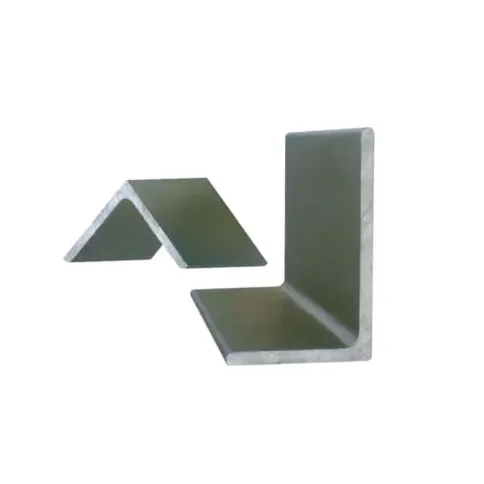
Table of Contents
- What Is Unequal Angle Steel?
- How Does Unequal Angle Steel Work?
- What Are the Main Benefits?
- Specifications and Material Options
- Where Is Unequal Angle Steel Used?
- How to Select the Right Product
- Fabrication and Corrosion Protection
- Unequal Angle Steel vs. Equal Angle Steel
- Frequently Asked Questions
- Conclusion and Next Steps
What Is Unequal Angle Steel?
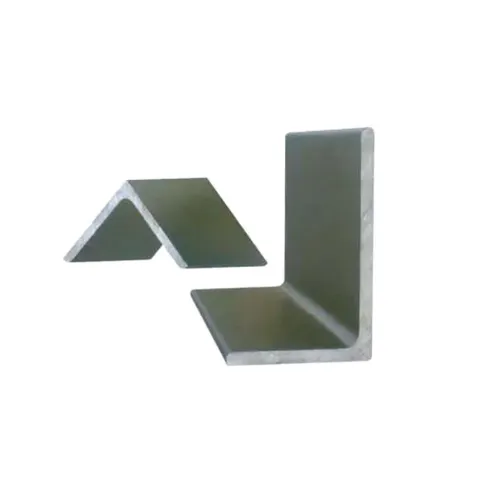
Unequal angle steel is a structural steel profile with an L-shaped cross-section and two legs of different widths. Unlike equal angle steel, which has two legs of the same dimension, this profile accommodates applications where a longer supporting leg and a shorter connecting leg offer a more practical arrangement.
Its asymmetrical geometry makes it useful for structural connections, bracing, support brackets, and photovoltaic mounting components. By selecting suitable leg dimensions and thicknesses, engineers can match the profile to available installation space and specified loading conditions.
For solar projects, the profile may be incorporated into support assemblies, reinforcement members, and connection structures. Its suitability depends on the complete structural design, including fasteners, connection details, steel grade, and environmental loads.
Energet Solar offers unequal angle steel with customizable dimensions and fabrication options for different project requirements. The product is designed for practical structural applications where dimensional consistency and compatibility with other mounting components are important.
How Does Unequal Angle Steel Work in Structural Systems?
The two legs of an unequal angle provide different connection surfaces within a compact profile. One leg can accommodate a primary attachment or support interface, while the other can connect to an adjacent member, depending on the engineering design.
In a photovoltaic mounting structure, for example, an angle profile may connect a brace to a support member or reinforce a joint between structural components. Its geometry can help designers work around installation constraints without introducing an unnecessarily complicated component.
However, an unequal angle does not automatically provide better load distribution in every application. Its performance depends on the direction of loading, cross-sectional dimensions, connection eccentricity, unsupported length, and boundary conditions.
- Structural support: Provides a defined interface between connected steel members.
- Bracing: Can contribute to resistance against lateral movement when correctly designed.
- Space-efficient connections: Accommodates assemblies with unequal attachment dimensions.
- Fabrication flexibility: Can be cut, drilled, or punched according to approved drawings.
What Are the Main Benefits of Unequal Angle Steel?
1. Flexible Connection Geometry
The unequal-leg configuration helps engineers accommodate different attachment widths and restricted installation spaces. This can simplify certain support arrangements and reduce the need for additional adapter pieces, provided the design is properly verified.
2. Efficient Material Utilization
Choosing a profile that matches the intended connection can help avoid unnecessary material or oversized components. Actual savings depend on the structural calculations, steel grade, fabrication requirements, and procurement quantities.
3. Compatibility with Solar Mounting Systems
Photovoltaic installations require numerous interconnected members that must work together under wind, snow, and dead loads. Unequal angle steel can serve as a support or connection component when its dimensions, strength, and hole pattern match the mounting design.
4. Custom Fabrication Options
Projects often require specific lengths, hole positions, and connection details. Energet Solar supports cold forming, CNC punching, precision cutting, and customized processing to accommodate different project drawings.
5. Outdoor Durability
Appropriate corrosion protection helps steel components withstand moisture and environmental exposure. For outdoor photovoltaic structures, a suitable galvanized coating or another specified protective system can reduce corrosion-related maintenance.
What Specifications and Material Options Should Buyers Consider?
The appropriate dimensions and material grade depend on structural calculations, installation conditions, and applicable project standards. The following table summarizes the product information published by Energet Solar.
| Specification | Published Details | Selection Consideration |
|---|---|---|
| Product type | Unequal Angle Steel | Confirm the required L-shaped profile and unequal leg dimensions. |
| Length | 1,000–6,000 mm | Match the specified member length and cutting plan. |
| Width | 16–100 mm | Verify which dimension refers to the relevant leg in the final drawing. |
| Height | 25–160 mm | Confirm the required second leg dimension. |
| Thickness | 3.0–10.0 mm | Select based on calculated stresses, stability, and connection design. |
| Steel grade | Q235B / Q355B; S235JR / S355JR | Specify the applicable standard and verified material grade. |
| Surface treatment | Hot-dip galvanized | Confirm coating requirements and environmental exposure conditions. |
| Galvanized thickness | 45–120 μm | Verify the specified coating thickness and inspection method. |
| Typical applications | Ground-mounted PV racking, steel structures, and carports | Check compatibility with the overall structural assembly. |
Note: These are published product ranges, not a guarantee that every combination is available as a standard stock item. Confirm the exact dimensions, tolerances, steel grade, applicable standards, and coating requirements before ordering.
For further information about complementary steel profiles, explore Energet Solar Equal Angle Steel and its solar mounting accessories.
Where Is Unequal Angle Steel Commonly Used?
Unequal angle steel serves a range of applications where structural connections require different leg widths. Its practical uses include the following:
- Ground-mounted solar systems: Supports selected brackets, braces, and connection assemblies in photovoltaic mounting structures.
- Solar carports: Helps connect or reinforce members within engineered parking-area solar structures.
- Industrial steel structures: Provides connection and reinforcement options for fabricated frames and support assemblies.
- Construction projects: Can be used in secondary steelwork, brackets, and structural connections where permitted by the design.
- Equipment support frames: Accommodates attachment arrangements that benefit from an asymmetrical profile.
Consider a ground-mounted solar project that uses steel posts, horizontal supports, and diagonal braces. An unequal angle may provide a suitable connection between selected members when the attachment surfaces differ in width. The engineer must still check member capacity, bolt spacing, local bearing, and overall structural stability before approving the configuration.
How Can You Select the Right Unequal Angle Steel?
Choosing a suitable product involves more than comparing prices or selecting the largest available dimensions. Buyers should evaluate the component in relation to its intended structural function.
- Define the application. Identify whether the profile will function as a brace, bracket, connection member, or another structural component.
- Confirm the dimensions. Specify both leg widths, thickness, length, hole locations, and dimensional tolerances on the technical drawing.
- Determine the steel grade. Select a grade that meets the project's strength, ductility, weldability, and applicable code requirements.
- Assess structural loads. Consider dead loads, wind, snow, vibration, connection forces, and any other relevant design conditions.
- Specify corrosion protection. Evaluate humidity, rainfall, coastal exposure, industrial pollutants, and the expected maintenance strategy.
- Check fabrication requirements. Establish whether the component needs pre-punched holes, custom cutting, bending, or other processing.
- Review supplier documentation. Request material certificates, dimensional inspection records, coating information, and other documents required by the project.
A complete technical specification helps reduce discrepancies between drawings, delivered components, and installation requirements. For large photovoltaic projects, aligning procurement documents with the engineering bill of materials is particularly important.
How Do Fabrication and Corrosion Protection Affect Performance?
Fabrication accuracy influences how well angle steel fits adjoining members. Incorrect hole positions, inconsistent dimensions, or excessive deformation can complicate installation and create unwanted stresses at connections.
Cold forming, CNC punching, and precision cutting can support repeatable production when appropriate process controls and inspections are applied. Buyers should confirm that the selected manufacturing process meets the drawing requirements and does not compromise the component's specified properties.
Corrosion protection is equally important for outdoor steelwork. Hot-dip galvanizing creates a zinc coating that helps protect steel against corrosion. Performance depends on coating quality, thickness, environmental conditions, drainage, and damage sustained during transportation or installation.
For demanding environments, project teams should assess whether the specified coating system provides adequate protection for the intended service conditions. Cut edges, drilled areas, welds, and damaged coating regions may require particular attention under the applicable coating specification.
Before accepting a delivery, consider checking:
- Profile dimensions and straightness against approved drawings.
- Steel grade and traceability documentation.
- Hole positions, cutting quality, and visible deformation.
- Coating thickness and surface condition.
- Packaging, labeling, and consistency across production batches.
What Is the Difference Between Unequal Angle Steel and Equal Angle Steel?
Both profiles have an L-shaped cross-section, but their geometry makes them suitable for different connection arrangements. Neither type is universally stronger; the correct choice depends on the structural requirements.
| Comparison Factor | Unequal Angle Steel | Equal Angle Steel |
|---|---|---|
| Leg dimensions | Two legs have different widths. | Both legs have the same width. |
| Connection geometry | Useful for asymmetric attachment arrangements. | Useful for balanced, symmetrical leg arrangements. |
| Space requirements | Can accommodate connections with unequal available space. | Can simplify connections designed around equal leg dimensions. |
| Structural behavior | Depends on section geometry, loading direction, and restraints. | Also depends on section geometry, loading direction, and restraints. |
| Typical selection priority | Different leg widths or specific connection geometry. | Equal leg widths or symmetrical connection requirements. |
When comparing the two, engineers should assess cross-sectional properties, connection eccentricity, load direction, and fabrication costs rather than relying on profile shape alone.
Frequently Asked Questions About Unequal Angle Steel
1. What is the main advantage of unequal angle steel?
Its primary advantage is the ability to accommodate structural connections with different leg widths. This can improve layout flexibility and simplify selected support or bracing arrangements when the profile matches the engineering design.
2. Which steel grades are available from Energet Solar?
Energet Solar lists Q235B and Q355B carbon steel, along with S235JR and S355JR designations for relevant requirements. Confirm the exact grade, governing material standard, and available documentation for your order.
3. Is unequal angle steel suitable for outdoor solar mounting systems?
Yes, it can be used in outdoor photovoltaic structures when the profile, steel grade, structural design, and corrosion protection meet project requirements. Energet Solar lists hot-dip galvanized options with a published coating thickness range of 45–120 μm.
4. Can the dimensions and hole positions be customized?
Customization may be available for project-specific dimensions and fabrication details. Provide approved drawings, required quantities, tolerances, material grades, and surface-treatment specifications so the supplier can assess feasibility.
5. What information should I provide when requesting a quotation?
Include the two leg dimensions, thickness, length, steel grade, coating requirements, hole pattern, quantity, destination, and required delivery schedule. Drawings and applicable standards will help the supplier prepare a more accurate quotation.
6. How can I verify the quality of an order?
Request material traceability documents and relevant inspection records. Depending on project requirements, verification may include dimensional checks, coating-thickness measurements, visual inspection, and review of material certificates against the purchase specification.
Conclusion: Choosing the Right Unequal Angle Steel for Your Project
Unequal angle steel provides a useful solution for photovoltaic mounting structures, steel frames, carports, and industrial connections that require different leg dimensions. Its value comes from matching the profile geometry, material properties, fabrication details, and corrosion protection to the actual engineering requirements.
Energet Solar offers configurable steel profiles and fabrication services to support different solar mounting and construction projects. If you are sourcing structural steel for a new installation or expanding an existing supply chain, share your drawings, technical specifications, quantity, and project conditions with the team. Visit the Unequal Angle Steel product page and contact us to discuss customized specifications, technical requirements, and a quotation for your project.
Related News
- Is ZAM Coated Rectangular Tube the Best Choice for Long-Life Steel Structures
- How Can ZAM Steel Pipe Improve Corrosion Resistance and Extend the Service Life of Solar Mounting Structures
- Why Is Structural Hollow Section a Smarter Choice for Stronger and More Efficient Solar Structures
- How Can Cold Formed Steel Purlin Improve the Strength, Efficiency, and Durability of Solar Structures
- How Can a Steel Water Gutter for PV Roof Improve Solar Drainage and Long-Term Roof Protection
- Why Is Self-healing ZAM Steel Pipe Becoming a Smarter Choice for Long-Life Solar Structures
Leave me a message